Enzymatic siRNA Synthesis
Our enzymatic siRNA technology utilizes enzyme-mediated ligation of four or more RNA fragments to produce target siRNA compounds through a scalable, fragment-based approach. Integrated capabilities in fragment synthesis, ligation process development, purification, and established quality control strategies enable us to translate this innovative approach into practical manufacturing.

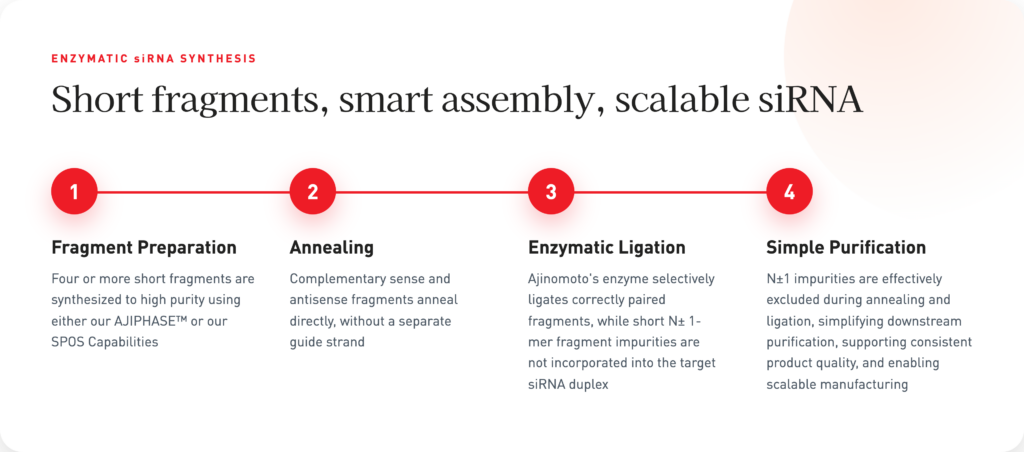
How Enzymatic siRNA Synthesis Works
The siRNA is divided into four or more short fragments, synthesized to high purity using our AJIPHASE™ or solid-phase oligonucleotide synthesis (SPOS) capabilities. Complementary sense and antisense fragments anneal directly without a separate guide strand, followed by selective ligation with Ajinomoto’s universal ligation enzyme. This reduces N±1-mer incorporation, simplifying downstream purification and supporting consistent product quality.
Patent: WO2020171092 — Method for Producing Modified Oligonucleotide Including Complementary Sequence
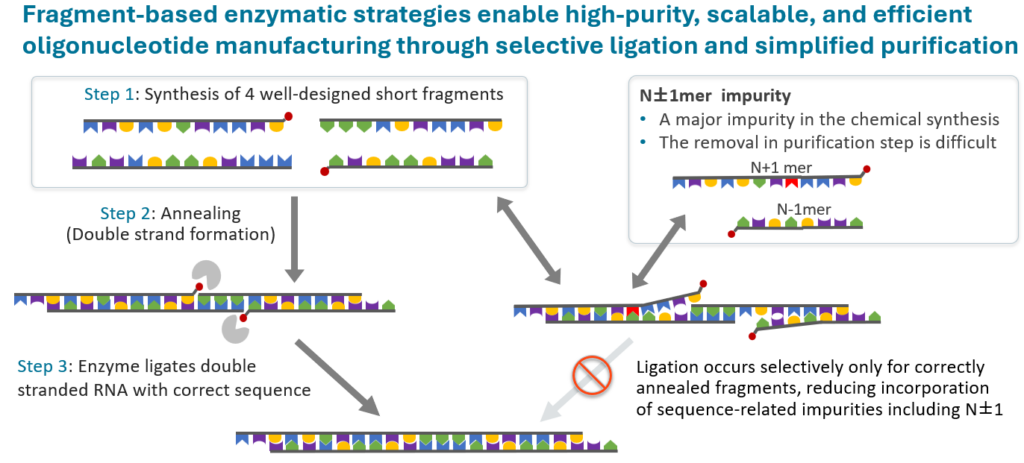

Production Overview
Scalable, fragment-based manufacturing of siRNA for GMP production.

Advantages of Enzymatic siRNA Synthesis
High Purity
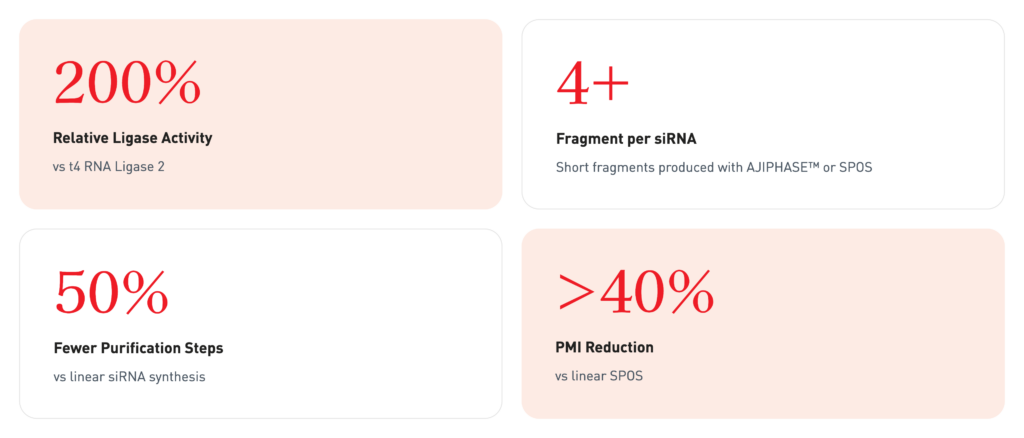
Short RNA fragments enable high-purity starting materials. Annealing and ligation reduce the incorporation of N±1-mer fragment impurities into the target duplex, supporting high product quality.
High Productivity
Use of crude fragments, combined with a highly active ligase and efficient ligation process, reduces purification requirements while supporting efficient fragment utilization and scalable manufacturing.
Reduced Environmental Impact
Reduced purification requirements and process inputs help lower Process Mass Intensity (PMI) and environmental impact.

Let’s Discuss Enzymatic
siRNA Synthesis for Your Program
Making large-scale siRNA manufacturing more accessible.